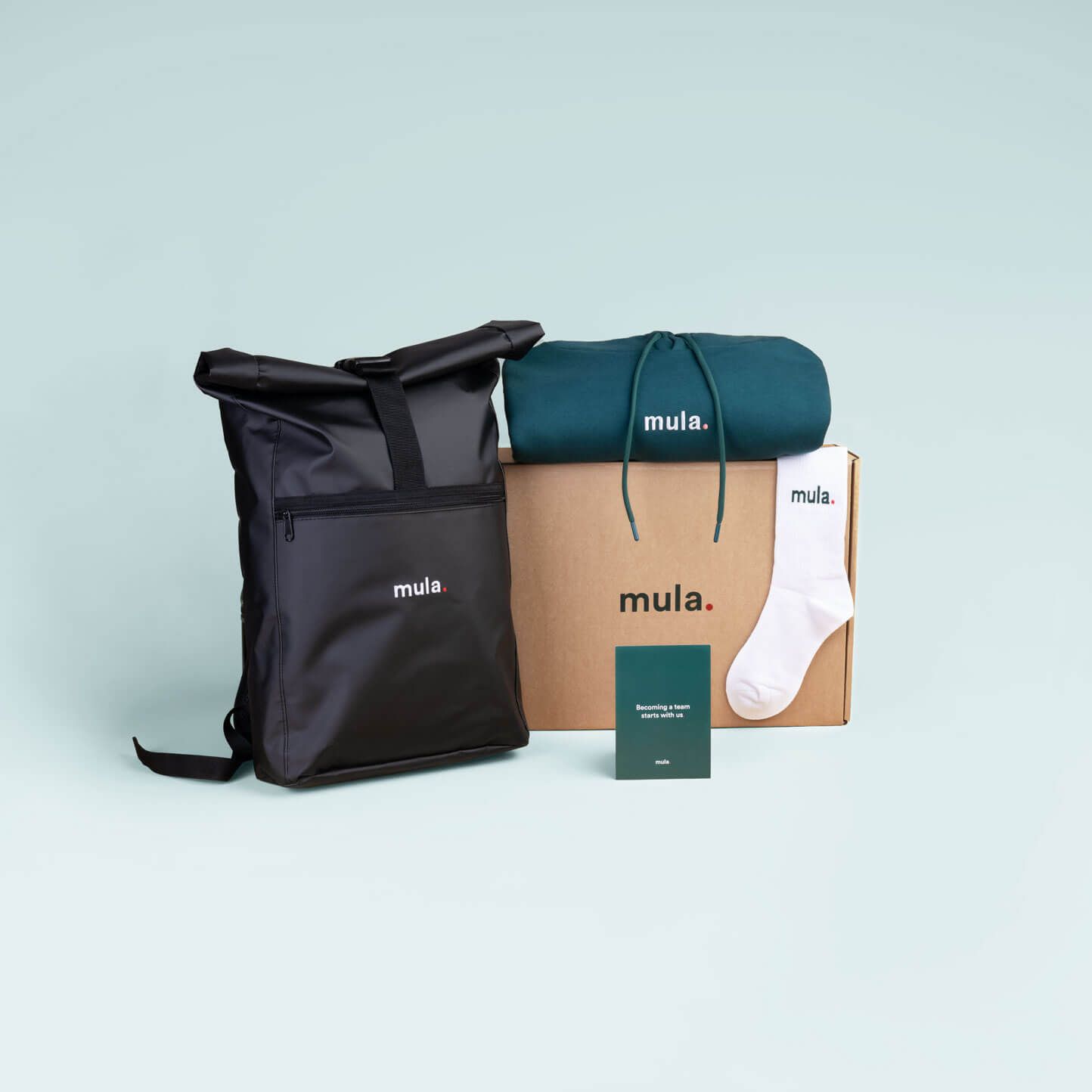
The Future Wears Your Logo.
The Top 5 Employer Merch Trends of the Year.

Employer merch has come a long way from the dusty box of generic pools in the storage closet. In 2025, smart HR and employer branding teams treated merch as a strategic tool, one that reinforces culture and turns employees into ambassadors. This shift is fueled by distributed workforces, and a generation of talent that expects brands to stand for something real. This year brought measurable change. Companies started using tech to connect physical products with digital experiences, and swapping novelty items for premium basics people actually want to wear. Sustainability moved from nice-to-have to non-negotiable, and personalization became possible at scale thanks to smarter production methods.Whether you are building your first welcome kit or refreshing an entire merch program, understanding these shifts will help you create moments that matter and gear that people keep. Here are the five trends that defined employer merch in 2025.
1. Less Stuff, More Story: Quality Over Quantities .
The era of stuffing boxes with as many low-cost items as possible is over. Employees are more selective, and so are candidates, they can tell instantly whether a piece feels premium, and aligns with the brand or whether it is just more clutter. When someone actually chooses to wear your hoodie on the weekend or keep your bottle on their desk, that is when employer merch starts to work as a true brand touchpoint, not just a line item in the budget. Quality over quantities is not just about nicer fabrics or higher price tags. It is about being intentional: fewer pieces, but each one with a clear role in the employee journey and a story that connects back to your culture, values, and EVP. For HR and employer branding items, this shift also makes life easier. Better-made products last longer and get re-worn more often, which helps both your budget and your sustainability goals. Instead of managing dozens of random items, you curate a small, consistent set of high-quality essentials that employees are proud to use and happy to be seen in, turning every wear into a genuine endorsement of your brand.

2. One Size Fits No One: The Rise of Personalized Merch.
Employees expect their experience at work to reflect who they are and what they care about so generic kits feel out of touch. When merch reflects an employee’s role, and even personal preferences, it stops being “swag” and starts feeling like a thoughtful part of the relationship. Hyper personalization can show up in small but powerful ways: letting people pick their size and color, tailoring items to climate and commute, or adding details like their name, or team on selected pieces. You can also customize by moment, onboarding, promotion, parental leave or relocation, so the same brand system shows up differently depending on where someone is in their journey. This turns each drop into a signal that the company sees the person behind the employee ID. For HR and employer branding teams, smart personalization does not have to mean chaos. With the right setup, you define a core set of high quality basics and the layer in variables, location-specific, role-based tools, or optional add-ons employees can choose themselves. The result is a scalable system where people receive merchandise that feels made for them, while the brand still looks consistent.

3. Sustainability Is the New Baseline.
Sustainability has shifted from a nice extra to an expectation. Employees care about what their merchandise is made of, how long it lasts, and what happens to it when they are done using it, so throwaway products do not just feel wasteful. Choosing better materials and responsible production partners are now part of how a company signals its values and earns trust.For HR and employer branding teams, this means every merch decision is also a reputation decision. A smaller lineup of responsibly sourced essentials will do more for your brand than a larger catalog of low impact items that end up in the trash. When your merchandise is something people are proud to wear and feel good about environmentally, it reinforces your culture and shows your audience that you are playing the long game, not chasing the cheapest option. At mula, sustainability is not an afterthought, it’s certified, and continuously improved. Our textile partners are fully GOTS-certified, a standard we recently renewed, ensuring organic materials, and responsible production practices. We are also EcoVadis Silver–rated, placing us among the top companies globally for environmental and ethical performance. By choosing mula, HR and employer branding teams know that every item they distribute meets rigorous sustainability criteria and supports a supply chain they can be proud of.

4. Offline Gear, Online Story: the Rise of Phygital Merch .
Phygital is a concept that combines physical and digital elements to create seamless, interactive experiences. In the context of employee merchandise, phygital means blending tangible branded items like swag or gifts with digital enhancements to deepen engagement and connection.For example, an employee gift might include a physical item like a branded notebook or tech accessory that has an embedded NFC chip or QR code linking to personalized content, virtual events, or rewards. This approach makes merchandise more than just a physical object, it becomes a gateway to ongoing digital experiences, boosting employee morale and strengthening company culture.Merch used to end when the box arrived, now it is just the beginning.This trend shines in employee moments: an onboarding kit with scannable elements that lead to a welcome video or team directory, a milestone gift that triggers a digital badge or AR filter for social sharing. It is not about flashy tech for its own sake, phygital keeps things human while making merch smarter, helping distributed teams feel connected and giving HR real data on how items are used. For employer branding, phygital opens new ways to measure impact beyond just "did they like it?” You can track scans, visits, and interactions to refine future drops, ensuring every piece drives belonging and boosts your EVP. Start small: add a QR to your next kit that points to a branded story or resource hub, and watch how offline items spark online conversations that strengthen your community.

5. Across Borders & Screens: The Art of Consistent Merch .
Maintaining brand consistency across global teams and diverse markets is a strategic art and a must for building trust and loyalty. When your employer merch carries the same logos, colors, and quality everywhere, it creates a recognizable identity that strengthens connection no matter where employees work. This consistency reassures employees and candidates alike that they belong to a brand with clear values and a unified culture. Yet consistency doesn’t mean one-size-fits-all. Smart brands balance a core identity with localized touches that respect cultural preferences, climate, or work styles. This could mean offering merch color options to suit regional tastes, adapting taglines for language nuances, or tailoring products for remote versus office teams, all while keeping the brand’s visual and emotional heart intact. Centralized brand guidelines and tools play a critical role in this balancing act. They empower local teams with clear rules and flexible templates, ensuring every piece of merch feels unmistakably on brand. Strong governance paired with regular audits keeps the global brand story cohesive across physical goods and online touchpoints, creating a seamless experience that bridges borders and screens. This thoughtful approach to consistent, considered merch is how brands turn limited-edition drops into lasting symbols of belonging and pride for employees worldwide.

Final Thoughts.
These five trends show employee merch evolving from a budget item into a powerful culture tool. In 2025,smart HR teams used merch to create belonging and measure impact in ways that generic swag could never. The common thread? Intention: every piece chosen, customized, and delivered with purpose.The payoff is real. High-quality, thoughtful merch boosts engagement and turns employees into walking brand advocates,especially across distributed teams where physical items bridge digital gaps. Ready to level up? Create a flexible system with mula. Curate core essentials, add personalized options,and layer in tech for tracking and stories. Your teams will feel seen, your brand will shine globally, and those unopened boxes will become a thing of the past.
FAQ.
Thoughtful company merchandise boosts employee engagement in 2025 by creating physical recognition that fosters belonging and pride. High-quality, personalized items like custom hoodies or milestone gifts reinforce culture, bridge hybrid work gaps, and turn employees into brand ambassadors. This leads to higher morale, retention, and participation in company initiatives.
Company merchandise promotes wellness and work-life balance by providing practical tools like branded water bottles, yoga mats, or stress-relief items that encourage healthy habits daily. These gifts signal care for employees' physical and mental health and boosting productivity in hybrid setups. Items tied to wellness challenges or breaks help integrate self-care into routines, fostering better boundaries between work and personal time.
Memorable onboarding gifts combine personalization and brand storytelling. These items make employees feel valued from day one, ease anxiety, and reinforce culture through subtle branding. Thoughtful touches, such as handwritten notes or company swag tied to their role, create lasting excitement and belonging.
Companies personalize corporate merchandise by adding names, roles, or milestones to items, offering choice in colors/sizes, and tailoring kits to preferences or locations.
Through thoughtful rewards that make employees feel valued, corporate merchandise contributes to long-term success by boosting retention and brand advocacy. It enhances visibility as walking ads and strategic use aligns with culture, reducing turnover and driving sustained growth.
You have more questions or need more guidance?
Our sales team is always happy to help. Contact us and we will walk you through any custom options or specific project needs.